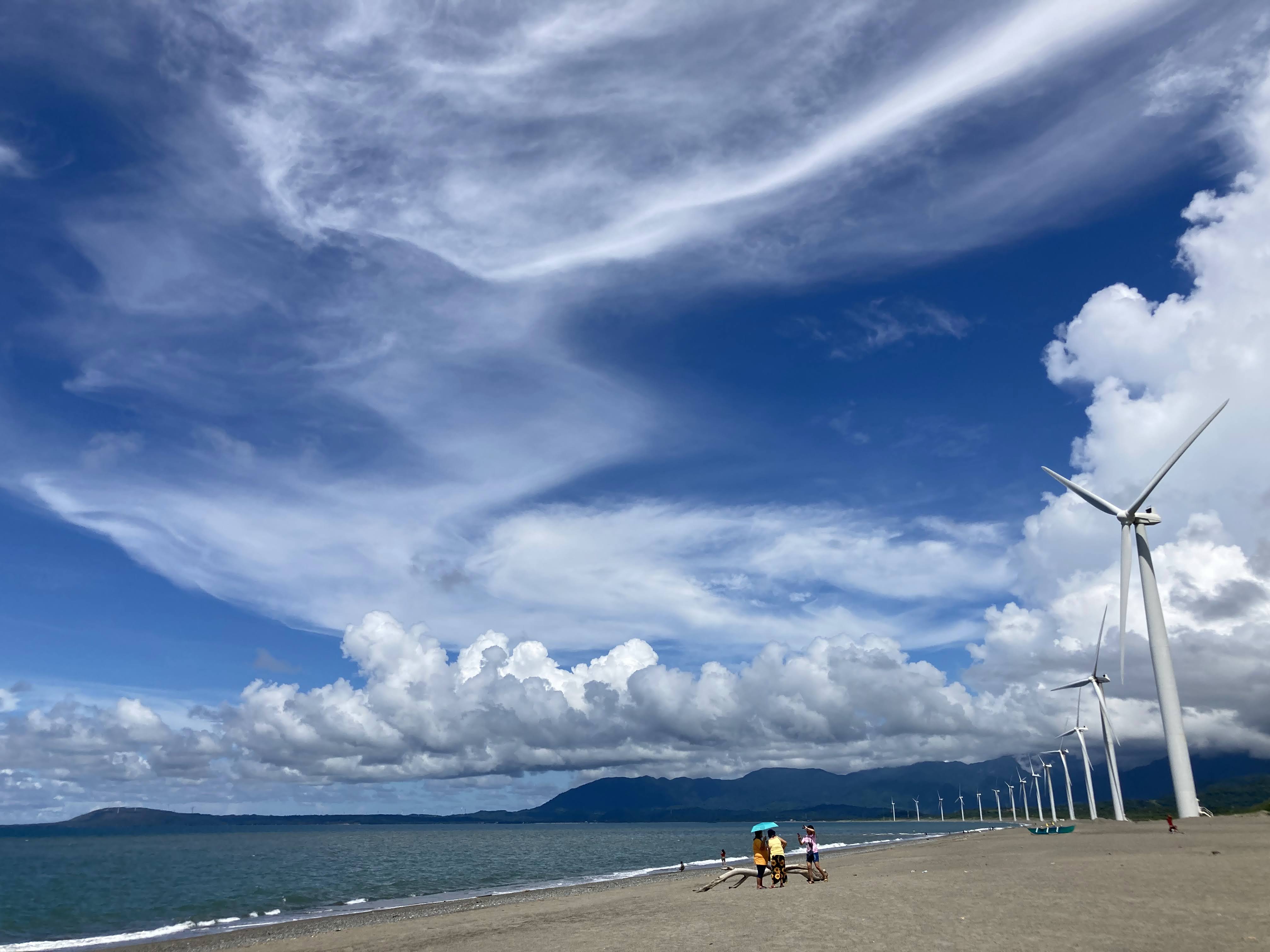

Bangui Windmills (Bangui)
Southeast Asia's first wind farm — 20 towering turbines standing sentinel along the windswept shores of Bangui Bay, where nature and innovation meet.
Where Wind Meets the Sea
Stretching 9 kilometers along the dark-sand shoreline of Bangui Bay, the Bangui Windmills form one of the Philippines' most photographed landmarks. Twenty Vestas V82 wind turbines — each standing 70 meters (230 feet) tall — spin gracefully against the West Philippine Sea, creating a mesmerizing contrast between cutting-edge technology and raw coastal beauty.
Why visit
Built in 2005 as Southeast Asia's first wind farm, these turbines generate enough electricity to cover approximately 40% of Ilocos Norte's power needs. Beyond their engineering significance, they have become a symbol of the region's commitment to renewable energy and a must-visit destination along the Ilocos tourist circuit. Best of all? The viewing area is completely free and open to the public year-round.
What you'll find
- 20 towering 70-meter wind turbines along a 9-km coastline
- Completely free viewing area, open 24 hours a day
- Dramatic ocean views perfect for photography
- A natural starting point for the Ilocos Norte scenic route
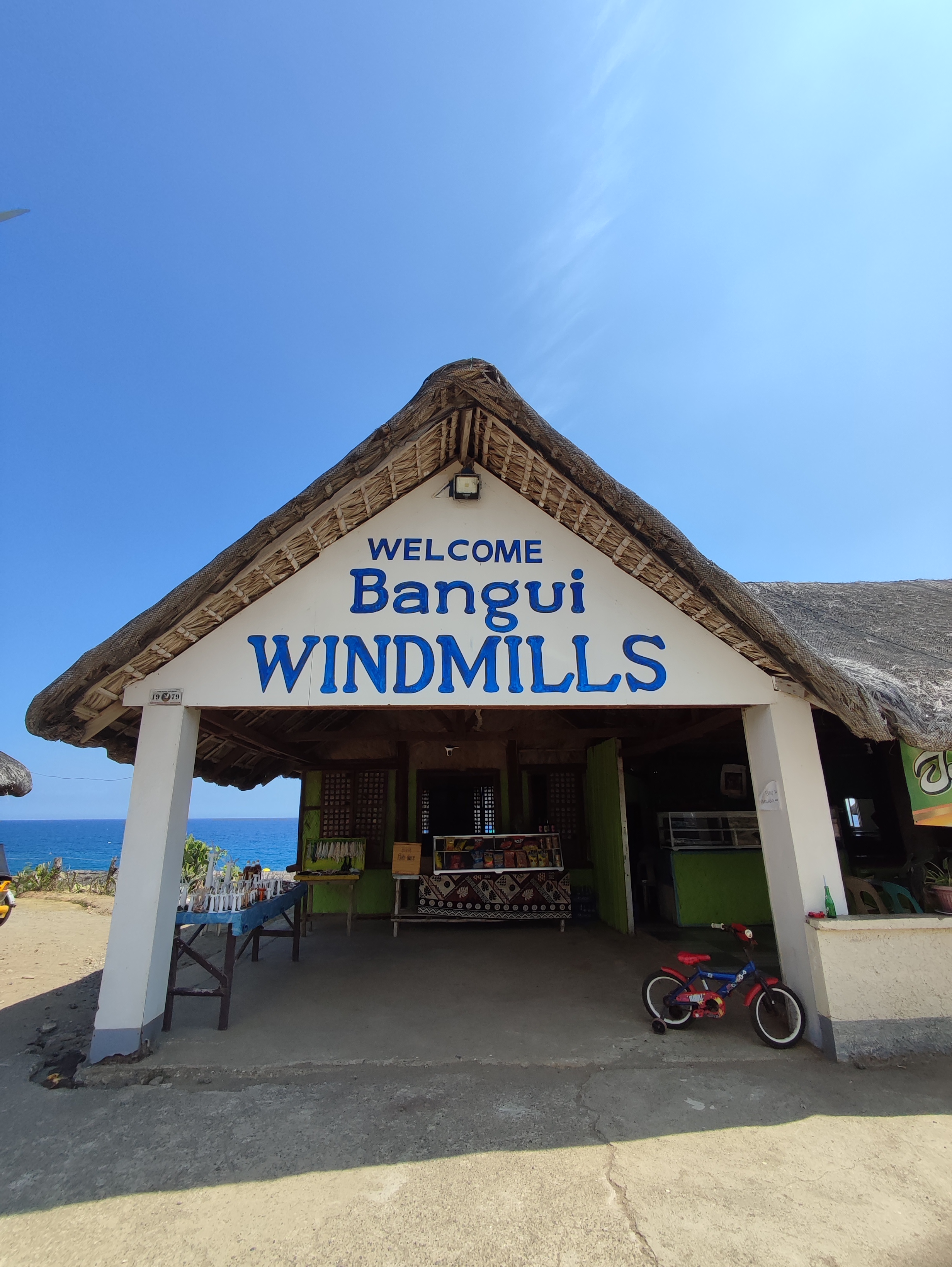
Southeast Asia's First Wind Farm
From pioneering vision to iconic landmark — how Bangui Bay became the birthplace of commercial wind power in Southeast Asia.
Commissioning & Phase I
The Bangui Wind Farm was commissioned by NorthWind Power Development Corporation, with 15 Vestas V82 1.65 MW turbines installed along the shoreline. This marked the birth of commercial wind energy in Southeast Asia. Danish firm Vestas supplied the turbines, and the project was financed partly through the Danish International Development Agency (DANIDA).
Phase II Expansion
Five additional turbines were added, bringing the total to 20 units and expanding the wind farm's capacity to approximately 33 MW. The iconic single-row layout stretching across the bay became a powerful visual symbol for the Philippines' renewable energy ambitions.
From Power Plant to Tourist Icon
As word spread through travel blogs and social media, the windmills became a bucket-list stop on the Ilocos Norte travel circuit. The shoreline viewing area naturally evolved into a tourism destination while remaining a fully operational power facility. Today, Bangui Windmills power about 40% of Ilocos Norte's electricity and welcome thousands of visitors annually.
Under ACEN Renewables
The NorthWind Bangui facility now operates under ACEN Corporation (formerly AC Energy), the Ayala Group's energy platform. With a total capacity of 52 MW across its NorthWind assets, the Bangui site remains a flagship of the Philippines' clean energy transition and a model for how renewable infrastructure can coexist with thriving tourism.
When to Visit
Sunrise
Best Light5:30–7:00 AM — The turbines silhouetted against the golden dawn over the West Philippine Sea. Fewer crowds, cooler temperatures.
Late Afternoon
Golden Hour3:00–5:30 PM — Soft golden light as the sun dips behind the Ilocos mountains. Popular with tour groups.
Midday
HotterHarsh overhead light and stronger heat. Bring water, sunscreen, and a hat — shade is limited.
Time of Day
Suggested Stay Duration
Photo ops at the viewing area. Enough if you're on a tight Ilocos day tour.
Walk the shoreline, take photos from multiple angles, buy souvenirs and empanada.
Combine with Kapurpurawan Rock Formation, Cape Bojeador Lighthouse, and Burgos Wind Farm.
Rainy & Typhoon Season (June–October): Strong winds and heavy rain may limit visibility and access. Always check weather forecasts before traveling during these months.
Current Weather & 7-Day Forecast
Coastal conditions at Bangui Bay, refreshed continuously so you can plan your visit with confidence.
7-Day Outlook
Entrance Fee & Tickets
One of the few world-class attractions in the Philippines that costs absolutely nothing.
One of the few world-class attractions in the Philippines that costs absolutely nothing. The Bangui Windmills viewing area along the shoreline is completely freeand open to the public 24 hours a day, 7 days a week. There are no gates, no ticket booths, and no admission charges whatsoever.
What's Included (Free Access)
- Shoreline viewing area & photo spots
- Walking along the beach near the turbines
- Taking photographs (personal use)
Possible Expenses
- Local souvenirs and snacks from vendors near the viewing area (voluntary)
- Environmental fee — occasional small fees collected by local government (~PHP 10–20), not consistently applied
- Drone photography — always check local rules before flying; drone use near power infrastructure may be restricted
Parking Information
On-Site Parking
Free Roadside Parking
Parking is free and available along the roadside shoulder adjacent to the viewing area. Visitors can pull over along the roadside adjacent to the viewing area. The road runs parallel to the shoreline, so you'll have a place to park wherever you stop along the 9-kilometer turbine stretch.
Parking Type
Roadside pull-off along the national highway. No designated parking lot — park on the shoulder facing the turbines.
Vehicle Size
Suitable for cars, vans, motorcycles, and even tour buses. The road shoulder is wide enough for most vehicles.
Safety Note
Park well off the road. Watch for passing vehicles when crossing. The national highway can have moderate traffic, especially during peak tourist season.
Best Spot
The area near the central cluster of turbines offers the best photo angles. Souvenir stalls and empanada vendors are usually found here too.
How to Get to Bangui Windmills
Bangui is approximately 550 km north of Manila and about 55 km from Laoag City. Multiple options exist whether you're self-driving or relying on public transport.
By Car / Self-Drive
From Manila: Take NLEX → SCTEX → TPLEX, then the Manila North Road (AH26) through Ilocos. From Laoag: ~55 km north.
- Approximately 9–11 hours drive from Manila
- 1 to 1.5 hours from Laoag City
- Use Google Maps or Waze — search for "Bangui Windmills" or Plus Code GPH9+C6H
- The road is well-paved throughout
By Bus
Several bus companies operate Manila–Laoag routes including Partas, Florida, Fariñas Transit, and GV Florida.
- Manila to Laoag bus fare: approximately PHP 600–900 one way
- Bus journey takes about 8–10 hours
- From Laoag terminal, take a tricycle or jeepney to Bangui-bound van terminal
- Northbound bus/van to Bangui town takes ~1 hour, then tricycle to windmills (5–10 minutes)
By Tour / Tricycle
Day tours from Laoag hotels are widely available. Tricycles from Bangui town center offer the most flexible local option.
- Ilocos Norte day tours typically include Bangui Windmills, Cape Bojeador Lighthouse, Kapurpurawan Rock Formation, and Pagudpud beaches
- Tour prices range from PHP 1,500–3,500 per person
- Tricycle from Bangui town to windmills: approximately PHP 50–100 round trip
- Habl-habl (motorcycle taxi): budget option for solo travelers, PHP 30–50 one-way
How to Reach Bangui Windmills
Bangui sits at the northern tip of Ilocos Norte, about 2 hours from Laoag City. Here are the main ways in.
From Laoag Airport
Laoag International Airport (LAO) is the nearest gateway, with flights from Manila.
- 1Land at Laoag International Airport (LAO), roughly 90–110 km south of Bangui.
- 2Hire a private transfer, rent a car, or take a northbound bus from Laoag terminal toward Pagudpud/Bangui.
- 3Follow the national highway north; the windmills appear along the coast just before Bangui town proper.
By Bus / Public Transport
Long-haul buses from Manila and regional lines connect to Bangui and Pagudpud.
- 1From Manila, take a Partas or GV Florida bus to Laoag, then transfer to a Bangui/Pagudpud-bound local bus.
- 2Ask the conductor to drop you at the Bangui Windmills viewing stretch (Paspo / coastal road).
- 3From the highway, walk or take a short tricycle to the shoreline viewing point.
Taxi / Ride-Hailing
Ride apps are limited up north; private hire is the most reliable.
- 1In Laoag, arrange a taxi, Grab (where available) or a private van for a round-trip to Bangui.
- 2Agree on a flat fare and waiting time before departure — many drivers wait while you explore.
- 3For shorter hops, local tricycles connect Bangui town to the viewing area.
Driving / Own Vehicle
The most flexible option for the Ilocos Norte wind-and-lighthouse loop.
- 1Take the North Luzon Expressway to Tarlac, then the TPLEX toward La Union.
- 2Continue north via the national highway through Ilocos Sur and Ilocos Norte to Laoag, then Bangui.
- 3Park on the wide road shoulder facing the turbines; the 9 km stretch is easy to explore stop-by-stop.
Roads are generally good but can flood or be disrupted during typhoons (Jul–Oct). Always check weather and road advisories before a long drive.
Where to Eat Near Bangui Windmills
From quick Ilocos Empanada snacks to casual sit-down cafes with ocean views.
Must Try: Ilocos Empanada
The Iconic Street Food of Ilocos Norte
No trip to Bangui is complete without sampling the famous Ilocos Empanada — a deep-fried orange pastry stuffed with grated green papaya, longganisa (local sausage), and a whole egg. Vendors selling fresh empanada are often found near the central viewing area. Price: PHP 40–70 each.
Ilocos Empanada Vendors
On-site near central viewing areaThe famous Ilocos Empanada — a crispy deep-fried rice-wrapped pastry stuffed with green papaya, mung beans, and longanisa sausage, served with sukang Iloco vinegar. A must-try local snack right at the windmills.
Kang Kang Windmill Cafe
Near the windmills viewing areaCasual cafe serving coffee, cold drinks, snacks, and light meals with views of the turbines. A popular spot to rest and cool down after walking the shoreline.
Bangui Town Carinderias
2–3 km from the windmills (Bangui proper)Local eateries (carinderias) in Bangui town center serving affordable Filipino home-cooked meals: adobo, sinigang, inihaw, and rice. Look for places busy with locals.
18 Degrees North Camping Cafe
Near the windmill areaA laid-back camping-themed cafe serving coffee, frappes, and snacks. Outdoor seating with windmill views — popular with younger travelers and road trippers.
Chingado BBQ
Close to the viewing areaGrill house specializing in Filipino barbecue: inihaw na baboy (grilled pork), isaw, and street food favorites. Pair with cold rice and a soda for a satisfying meal.
Cañon View Inn & Restaurant
Within the Bangui areaInn with an on-site restaurant serving standard Filipino dishes, pancit, and fresh seafood when available. Offers both indoor and outdoor seating.
All recommendations are type-based guidance only. No specific commercial venue is endorsed. Choose establishments based on your own judgment — look for cleanliness and crowds of locals as quality signals.
Facilities & Nearby Services
As a non-profit guide, we list the types of services around the site — not specific businesses — so you can plan independently and neutrally.
Public Restrooms
Basic public toilets are available near the central viewing area and along the municipal baywalk. Facilities are simple; bring your own tissue and hand sanitizer.
Food & Drinks
Local snacks and drinks are sold by roadside stalls near the main cluster of turbines — including the well-known Ilocos empanada. See the Food section for details.
Stays Nearby
A range of accommodation types — from small pension houses and homestays to resorts — can be found in Bangui and the wider Pagudpud–Laoag corridor. Book ahead in peak season.
Shops & Convenience
Sari-sari stores and small convenience shops in Bangui town sell drinks, snacks and essentials. For supermarkets and ATMs, head to Laoag or Pagudpud.
Fuel & EV Charging
Petrol stations serve the national highway through Bangui. Charging for electric vehicles is limited in the immediate area — plan longer routes with a charged battery or a backup.
Parking
Free roadside parking runs along the shoreline road. See the Parking section for vehicle-size guidance and safety tips.
Listings describe service categories only. We do not endorse or rank any specific establishment, and availability can change — please verify on the ground.
Nearby Attractions Worth Visiting
Bangui Windmills is part of a scenic coastal route packed with Ilocos Norte's most iconic destinations. All spots below can be combined in a single day trip from Laoag.
Cape Bojeador Lighthouse
~12 km from Bangui WindmillsA historic Spanish colonial lighthouse built in 1892, perched on a hill overlooking the West Philippine Sea. The highest-elevated lighthouse in the Philippines and a National Cultural Treasure.
Kapurpurawan Rock Formation
~15 km from Bangui WindmillsSpectacular white limestone rock formations sculpted by wind and ocean waves over millions of years. A photographer's favorite, especially during early morning light.
Burgos Wind Farm
~10 km from Bangui WindmillsA larger-scale wind farm with 50 turbines across the hills of Burgos. The viewpoint offers a sweeping panorama of the turbines against the mountains and coast.
Saud Beach, Pagudpud
~25 km north of BanguiOften called the 'Boracay of the North' — a long crescent of powdery white sand with turquoise waters. A perfect spot to end a day of sightseeing with a swim.
Patapat Viaduct
~30 km north of BanguiA dramatic elevated coastal highway winding along the cliffs of Pagudpud. The elevated concrete viaduct offers breathtaking views of the ocean and the rocky coastline below.
Kabigan Falls
~28 km north of BanguiA picturesque 80-foot waterfall set in a lush tropical forest in Pagudpud. A short trek from the parking area through bamboo groves leads to the waterfall basin.
One-Day Ilocos Norte Scenic Route
A classic driving route starting and ending in Laoag, covering the highlights of northern Ilocos Norte. Ideal for first-time visitors.
- 1~45 min
Laoag → Cape Bojeador Lighthouse (morning)
Visit the lighthouse first when light is soft and crowds are thin.
- 2~1 hr
Kapurpurawan Rock Formation
Walk the limestone trail; morning is the best for photos.
- 3~30 min
Burgos Wind Farm viewpoint
Brief stop for panoramic photos of the 50-turbine array.
- 4~1.5 hr
Bangui Windmills (late morning)
Main stop — walk the shoreline, snack on empanada, take photos.
- 5~1 hr
Lunch near Bangui or Pagudpud
Ilocos Empanada at the windmills or a sit-down meal in Saud Beach area.
- 6~2.5 hr
Patapat Viaduct → Kabigan Falls → Saud Beach
Choose based on interest: viewpoint, waterfall trek, or beach swim.
- 7~2 hr
Return to Laoag (evening)
Approximately 1.5–2 hour drive back south.
💡 Route times include driving and short visits; adjust by pace and interest. During dry season (Nov–Apr), start early to avoid midday heat.
When to Visit — A Seasonal Strategy
A practical view of Bangui's climate through the year, drawn from long-term climate normals for northern Luzon.
Cool Dry (Amihan)
Nov – Feb- Weather
- Breezy, 22–29°C, little rain. The northeast monsoon brings steady coastal winds.
- Coast & Sea
- Calmest seas; clearest light for photos.
- Nature Watch
- Strong, visible turbine spin; migratory birds along the coast.
- Best For
- Most comfortable sightseeing and photography.
Hot Dry
Mar – May- Weather
- Hot and humid, 25–34°C, little rain. Intense midday sun.
- Coast & Sea
- Warm water; busy beach season.
- Nature Watch
- Lush green hills; dry, hazy horizons.
- Best For
- Early-morning or late-afternoon visits.
Wet (Habagat)
Jun – Sep- Weather
- Southwest monsoon; humid with heavy afternoon rains.
- Coast & Sea
- Rougher seas, bigger waves; dramatic skies.
- Nature Watch
- Verdant landscape; occasional flooding on low roads.
- Best For
- Dramatic storm-light photography; fewer crowds.
Transition / Typhoon
Oct – early Nov- Weather
- Unstable; typhoon risk peaks. Sudden strong winds and rain.
- Coast & Sea
- Dangerous surf; possible coastal closures.
- Nature Watch
- Turbines may pause in extreme wind for safety.
- Best For
- Check advisories; flexible, indoor-backup plans.
Suggested Itineraries
Pick a plan that matches your group and pace — all built around the windmills and nearby Ilocos Norte highlights.
Tailored to Your Trip
Families with Kids
Easy, low-stress stops with food and photo breaks.
- Arrive mid-morning; park at the central viewing area.
- Let kids watch the turbines and fly a kite on the wide shoreline.
- Snack on empanada from roadside stalls; short walk along the bay.
- Add a quick stop at the Bangui baywalk playground.
Photography & Nature
Chase the best light and coastal landscapes.
- Golden hour at sunrise or sunset for silhouettes against the sea.
- Shoot from multiple points along the 9 km stretch for variety.
- Add Kapurpurawan Rock Formation and Cape Bojeador Lighthouse.
- Bring a polarizer for glare off the blades and water.
Low-Effort / Accessible
Minimal walking, comfortable pacing.
- Drive the coastal road and stop at the main viewing pull-off.
- Enjoy the view from the car or a shaded roadside bench.
- Use nearby restrooms and stalls without long hikes.
- Avoid midday heat; choose a cool, breezy morning.
Classic Routes
Half-Day (2–3 h)
The windmills plus one nearby highlight.
- Bangui Windmills viewing stretch (60–90 min).
- Short drive to Kapurpurawan Rock Formation.
- Coffee or empanada stop in Bangui town.
Full-Day (6–8 h)
The northern Ilocos wind-and-heritage loop.
- Bangui Windmills and baywalk.
- Cape Bojeador Lighthouse (Burgos).
- Kapurpurawan Rock Formation.
- Burgos Wind Farm for a second turbine cluster.
- Late lunch in Pagudpud or Laoag on the return.
About the Wind Farm & Visitor Responsibility
A quick, neutral primer on what you're looking at — and how to enjoy it responsibly.
How It Works — A Quick Primer
- Bangui Windmills was Southeast Asia's first wind farm: 20 turbines line the coast, each about 70 m tall, converting steady monsoon winds into clean electricity.
- Wind is a renewable resource — unlike fossil fuels, it produces no direct emissions while generating power for nearby communities.
- The site sits on a dynamic coastal ecosystem where beach, dune and shallow sea meet; it is also a rest point for coastal birds.
Visitor Responsibility
- Stay clear of the turbine bases and fenced equipment — they are working infrastructure, not climbing frames.
- Park fully off the highway; watch for traffic when crossing the coastal road.
- Take all litter with you; leave the shoreline as you found it.
- Respect private land and local homes; keep noise and drones considerate of residents.
- Heed weather and sea advisories — coastal winds and surf can turn quickly.
Bangui Windmills Photo Gallery
Towering turbines, dramatic coastlines, and the iconic Ilocos Norte seascape.
All images © their original photographers. This site links to public sources for reference only.
Frequently Asked Questions
Sources
Where the information shown on this page comes from.
Synced from Google Maps user reviews, synced September 2026; copyright belongs to the original authors and Google Maps.
The official government tourism portal for regional travel information.
Find Bangui Windmills on the Map
Located along the coast of Bangui Bay, northern Ilocos Norte.